
There are some schools where the location is an attractive addition to the academic experience, and there are others where the location becomes part of the education itself. The Garda School belongs firmly in the second category. Based in the historic centre of Desenzano del Garda, overlooking one of Italy’s most celebrated lakes, the school offers international families something distinctive: an English language education that combines strong academics, small classes, personal attention and everyday opportunities to learn from the community beyond the classroom.
For education agents advising families who are looking beyond the traditional international school experience, this combination can be particularly appealing. Parents naturally want academic quality and a recognised educational pathway, but they are also increasingly interested in the environment in which their children will grow, the attention they will receive from teachers and the skills they will develop alongside their formal education.
The Garda School welcomes boys and girls in Grades 4 to 10, with students studying in English while living and learning in Desenzano del Garda in northern Italy. Its approach combines academic structure with small class sizes, close teacher support and practical learning experiences designed to encourage curiosity, confidence and independence.
The school itself sits on Piazza Matteotti in the historic centre of Desenzano del Garda, with views across Lake Garda. This central location allows students to interact with their surroundings rather than experiencing school life entirely within the confines of a campus. The local community, nearby parks, streets and businesses can all become part of the learning experience, while the town’s transport connections also make the school accessible from areas between Brescia and Verona and provide links towards major Italian cities including Milan and Venice.
For agents, the location provides an immediate point of difference when speaking with families. Desenzano offers the character and cultural experience associated with life in Italy while giving students access to an international education delivered primarily in English.
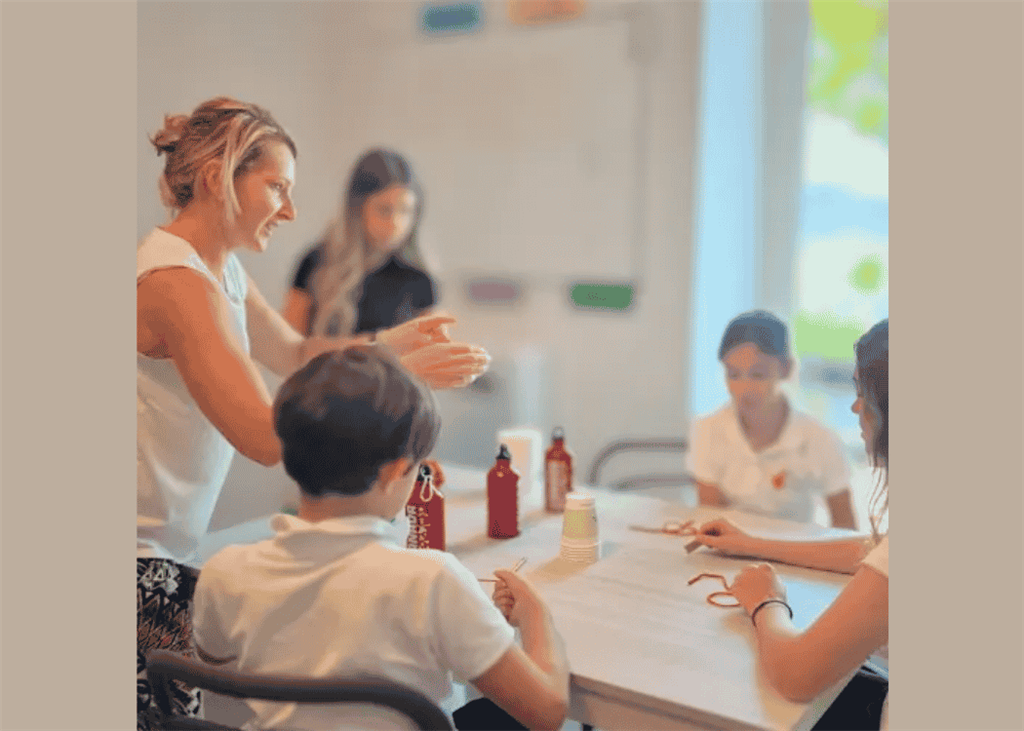
One of the most interesting aspects of The Garda School experience is the way ordinary school life connects naturally with the surrounding town. Students might begin their morning walking along the lakeside before meeting classmates and teachers in the piazza. Once inside the school, they study in comfortable classrooms equipped with modern technology, including large smartboards, while enjoying views towards Lake Garda.
The atmosphere is deliberately personal. Small groups of international students learn together, giving teachers more opportunity to understand individual needs while encouraging students to participate, ask questions and express their ideas. Lessons can take different forms depending on the subject and learning objective, ranging from projects and classroom discussions to sessions held outdoors.
Learning can therefore continue in a park, during a short hike, on a field trip or through a practical activity in the community. The intention is not simply to make lessons more entertaining, but to help students connect academic ideas with experiences they can understand and remember.
Even something as familiar as the town’s Tuesday market can become part of the school day. Students may use the market environment during language lessons or take part in practical activities involving budgeting, food and meal planning. It is an approach that turns the surrounding community into an educational resource and gives students opportunities to practise skills in authentic situations.
For many families exploring international education, class size can be just as important as curriculum. A smaller learning environment can make it easier for students to participate actively rather than becoming anonymous members of a large classroom.
At The Garda School, classes are deliberately small and interactive. Students come from different backgrounds and are encouraged to share perspectives, debate ideas and become more responsible for their own learning. Teachers combine their role as subject specialists with that of mentors, providing both academic challenge and individual support.
This can be especially relevant for students moving between education systems or adjusting to life in another country. A supportive classroom environment where teachers know their students well can help young people gain confidence more quickly while encouraging the independence that becomes increasingly important as they progress through school.
The academic philosophy at The Garda School is built around the idea that education should prepare students for more than examinations alone. Academic subjects remain central, but learning is also designed to develop curiosity, independence, resilience and practical skills.
The school follows an Ontario style curriculum, drawing on the Canadian tradition of rigorous academics, balanced education and broader personal development. Teaching takes place in English, while Italian language and culture form an important part of the experience. Specialist Italian teachers help students develop their language abilities and also provide support for preparation for Italian state examinations where relevant.
The curriculum includes core subjects such as English, Mathematics, Science and Social Studies, providing students with a strong academic foundation. These are complemented by subjects and activities covering areas including art, music, drama, design, physical education and outdoor learning.
This breadth matters when agents are discussing education options with families who want their children to remain academically ambitious without following an educational experience focused entirely on examinations.
The Canadian influence is one of the most distinctive elements of The Garda School’s academic offer.
Rather than following the International Baccalaureate programme, the school uses an Ontario style curriculum that allows greater flexibility in tailoring learning pathways around individual strengths, interests and future ambitions. The emphasis is on maintaining academic challenge while allowing teachers to personalise learning and students to explore subjects that genuinely interest them.
As students progress into high school, they follow the Ontario curriculum and can work towards the Ontario Secondary School Diploma, commonly known as the OSSD. The diploma is an internationally recognised secondary school qualification used by students applying to universities in destinations including Canada, the United Kingdom, the United States and countries across Europe.
For education agents working with internationally mobile families, having a clear academic pathway is particularly important. Families need to understand not only what their child will study today, but also where that education may take them later. The Ontario pathway provides that longer term academic context while the school’s personalised structure allows students to develop within a relatively small learning community.
The Garda School also places considerable emphasis on skills students are likely to use throughout their lives.
Core academic subjects are complemented by courses such as Financial Literacy and Digital Media Leadership. Students are also encouraged to develop healthy habits around areas including time management, physical activity and nutrition.
These subjects reflect an understanding that young people will eventually need to manage much more than academic knowledge. They will need to make financial decisions, navigate digital environments, communicate effectively, organise their time and take responsibility for their own wellbeing.
Practical projects, outdoor activities and engagement with the local community provide further opportunities for students to develop these abilities. A lesson might involve solving a practical problem, investigating local history in its original setting or working collaboratively on a scientific or creative project. Such experiences are intended to develop resilience, responsibility and independence alongside academic knowledge.
Communication with parents is another important part of the academic structure.
Students receive formal report cards three times during the year, including teacher comments on strengths, areas where further development may be needed and strategies for improvement. A mid term progress report provides an additional opportunity for students and families to understand how learning is developing before the next formal reporting stage.
Communication is not limited to formal reports. Teachers can also share progress through conferences, portfolios, student reflections and informal conversations, while parents receive information about learning goals that can help them support their children outside school.
For families whose children are studying within an international environment, this continuing dialogue can provide valuable reassurance. Parents are able to maintain a clearer understanding of both academic results and the broader progress their child is making.
Choosing a school abroad is rarely about curriculum alone. Families are considering academic outcomes, but they are also imagining what daily life will look like for their child. They want to know whether teachers will understand them, whether they will make friends, whether they will become more confident and whether the experience will prepare them for whatever comes next.
The Garda School brings those elements together in a particularly distinctive setting. Students receive an English language education based around an Ontario style curriculum while benefiting from small classes, personalised teaching and regular interaction with the Italian language, culture and community. The school day extends naturally into Desenzano del Garda itself, allowing the lake, town, parks, markets and surrounding region to become part of the educational experience.
For international education agents, that creates a compelling story to share with families seeking something more personal than a large international school environment. The academic pathway is clear, but so is the wider philosophy: students should leave school with knowledge, confidence, curiosity and the ability to apply what they have learned in the world around them.
For more information about The Garda School and its academic programmes, visit www.thegardaschool.com.








2026 SchoolsandAgents (C) - Developed by Lunarsors